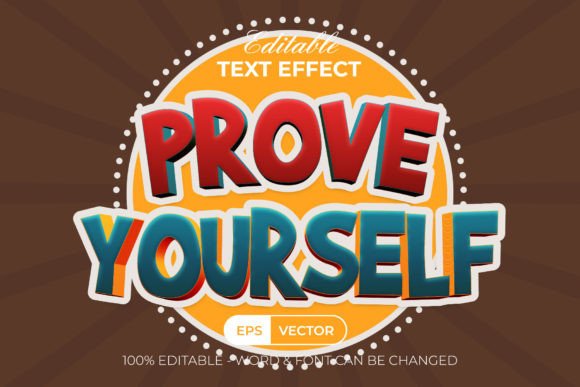
Mastering Bold Typography: A Practical Guide to the Prove Yourself 3D Text Effect Fun Style
In the crowded landscape of digital design, typography often serves as the primary hook for audience engagement. Whether you are crafting social media graphics, designing merchandise, or building brand assets, the visual weight and dimensionality of your text can determine whether a viewer stops scrolling or moves on. This is where specialized text effects come into play, bridging the gap between standard flat typography and complex, custom-built 3D illustrations. The Prove Yourself 3D Text Effect Fun Style represents a specific approach to this challenge, offering a pre-configured solution for Adobe Illustrator users who need high-impact, playful lettering without the steep learning curve of manual 3D modeling.
Understanding what this tool is—and perhaps more importantly, what it is not—is essential for designers evaluating their workflow options. It is crucial to clarify that this product is not a font file. Instead, it is a set of graphic styles designed for Adobe Illustrator. This distinction matters because it shifts the value proposition from static character shapes to dynamic, editable design systems. By leveraging the Graphic Styles panel, users can apply complex appearances to any text or shape with a single click, maintaining full editability of the underlying vector paths.
Deconstructing the Workflow: Efficiency vs. Customization
The core appeal of the Prove Yourself 3D Text Effect Fun Style lies in its integration with the native Adobe Illustrator environment. For professionals who already work within the Creative Cloud ecosystem, the friction of adopting new software can be a significant barrier. This effect bypasses that hurdle by utilizing tools designers already know. The process is straightforward: you type your text, select the object, and apply the style from the Graphic Styles menu. The result is an instant transformation into a vibrant, three-dimensional aesthetic.
However, efficiency often comes with tradeoffs. When comparing this method to building 3D text from scratch using extrusion tools or third-party plugins, the difference lies in control versus speed. Manual 3D construction allows for precise manipulation of lighting angles, depth values, and bevel profiles on a per-letter basis. In contrast, a graphic style applies a uniform appearance across the selected object. For projects requiring rapid iteration—such as creating multiple variations of a headline for A/B testing or producing a series of consistent social media posts—the uniformity of the Prove Yourself 3D Text Effect Fun Style is a strength. It ensures brand consistency and saves hours of manual adjustment.
Yet, for highly bespoke projects where each letter needs unique dimensional treatment, this approach may feel restrictive. Designers must evaluate whether the time saved by using a preset style outweighs the potential limitation in granular control. In many commercial contexts, such as podcast cover art or YouTube thumbnails, the "fun" and bold nature of this specific style is often exactly what is required, making the tradeoff favorable.
Technical Considerations and File Compatibility
Before integrating any new asset into your design library, technical compatibility is a key decision factor. The Prove Yourself 3D Text Effect Fun Style is built for Adobe Illustrator CC and above. This requirement ensures that the effect leverages modern rendering engines within the software, providing smoother performance and better visual fidelity than older versions might support. The package includes both EPS and AI files, offering flexibility depending on your project’s archival needs. The inclusion of a JPEG preview allows for quick visual reference without opening heavy vector files, streamlining the asset management process.
One notable feature is the use of free fonts. While the effect itself is not a font, the demonstration and template files rely on accessible typefaces. This is a practical consideration for teams collaborating across different machines. If a design relies on expensive, licensed proprietary fonts, sharing files can become complicated. By using free fonts, the creator of this effect lowers the barrier to entry for testing and implementation. However, designers should note that they can replace these with any font installed on their system. The effect is agnostic to the typeface used, meaning it will work with serif, sans-serif, script, or display fonts, though the visual outcome will vary significantly based on the weight and structure of the chosen type.
The organization of layers is another critical aspect highlighted in the product features. Well-organized layers are not just a convenience; they are a necessity for professional workflows. When an effect is applied, it often creates multiple stacked appearances or expanded objects. If these are not logically grouped and labeled, editing becomes a nightmare. The claim of "well-organized layers" suggests that the creator has structured the file so that users can easily isolate specific elements—such as shadows, highlights, or base colors—for fine-tuning. This level of organization distinguishes a professional-grade asset from a amateurish preset.
Visual Aesthetic and Use Cases
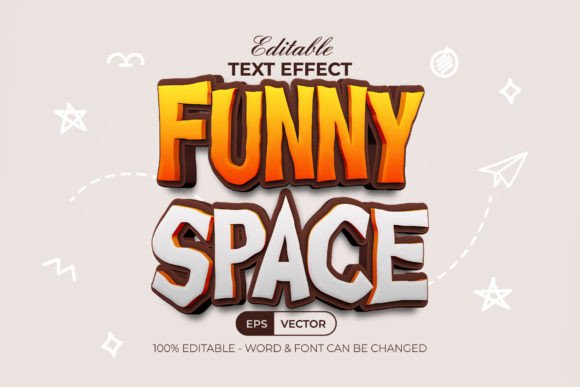
The descriptor "Fun Style" in the Prove Yourself 3D Text Effect Fun Style points to a specific visual language. It implies bright colors, bold contrasts, and a playful energy. This aesthetic is particularly effective in industries targeting younger demographics or brands aiming to project approachability and creativity. Think of lifestyle blogs, educational platforms for children, gaming communities, or casual dining promotions. In these contexts, rigid, corporate typography often fails to connect emotionally with the audience.
Conversely, this style may not be suitable for formal legal documents, high-end luxury branding, or minimalist architectural portfolios. The RGB color mode specified in the features indicates that the effect is optimized for digital screens. While RGB files can be converted for print, the vibrancy of neon-like 3D effects often translates differently in CMYK printing processes. Designers planning for physical merchandise, such as t-shirts or brochures, should test print proofs carefully. The digital brilliance seen on screen may appear muted in ink, requiring additional adjustments to saturation and contrast.
Real-world application examples help illustrate where this tool shines. Consider a YouTuber needing a consistent thumbnail style. Using the Prove Yourself 3D Text Effect Fun Style, they can type their video title, apply the effect, and have a polished, eye-catching graphic in seconds. Similarly, a social media manager running a campaign with daily quotes can maintain visual coherence by applying the same style to different phrases. The ability to retype text and retain the effect instantly supports high-volume content creation strategies.
Evaluating Alternatives and Making the Right Choice
When deciding whether to adopt this specific text effect, it is helpful to compare it against broader categories of design solutions. On one end of the spectrum are manual design techniques. Learning to create 3D text manually in Illustrator offers unlimited flexibility but requires significant skill and time. On the other end are automated online generators. These web-based tools are easy to use but often produce rasterized images (pixels) rather than vectors, limiting scalability and editability. They also frequently impose watermarks or subscription fees.
The Prove Yourself 3D Text Effect Fun Style occupies a middle ground. It provides the scalability and editability of vector graphics without the time investment of manual creation. It is a one-time purchase (or download) that integrates directly into existing professional software. For designers who value ownership of their assets and the ability to tweak every anchor point, this is a superior choice over online generators. For those who lack the advanced skills to build complex appearances from scratch, it is a more accessible option than trying to master Illustrator’s 3D and Materials panel.
However, there are limitations. Because it relies on Illustrator, it excludes users who prefer Photoshop, Affinity Designer, or Canva. If your workflow is heavily centered outside of Adobe Illustrator, this asset will not be useful. Additionally, while the effect is editable, it is still a preset. Designers seeking completely unique, never-before-seen textures may find themselves constrained by the predefined look unless they are comfortable diving into the Appearance panel to modify the underlying settings.
Final Thoughts on Implementation
Ultimately, the decision to use the Prove Yourself 3D Text Effect Fun Style depends on your specific project requirements and workflow preferences. It is an excellent resource for designers who need to produce high-quality, engaging typography quickly and consistently. The inclusion of read-me files with font download links demonstrates a user-centric approach, reducing setup time and frustration. The well-organized layers ensure that the effect remains a flexible tool rather than a rigid constraint.
For professionals aged 20–50 who are balancing creative ambition with tight deadlines, this type of asset can be a valuable addition to their toolkit. It allows for experimentation with bold, 3D aesthetics without the risk of project delays. By understanding its strengths—speed, consistency, and vector editability—and its limitations—RGB focus and preset nature—designers can make an informed choice. If your goal is to create vibrant, digital-first content that stands out in a noisy feed, this effect offers a practical, efficient path to achieving that look. As with any design tool, the best approach is to test it within a real project context, evaluating how it fits into your personal creative rhythm and technical requirements.