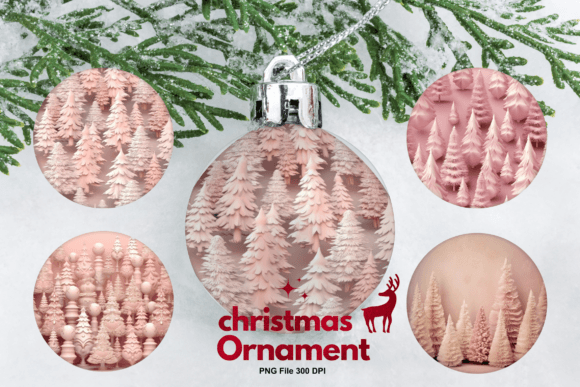
Mastering the Art of Sublimation with 3D Christmas Tree Ornament Templates
The holiday season brings with it a unique blend of nostalgia and creativity, driving crafters and small business owners to seek out designs that stand out in a crowded market. Among the most popular trends in recent years is the use of 3D-style digital assets for physical products. Specifically, the 3D Christmas Tree Ornament Decorate PNG has become a cornerstone for those looking to create professional-grade, eye-catching holiday decor through sublimation printing. Understanding how to leverage these high-resolution digital files can transform a simple crafting hobby into a polished, profitable venture.
Why Digital Precision Matters in Holiday Crafting
When working with sublimation, the quality of your source file is paramount. Unlike traditional printing methods where minor imperfections might go unnoticed, sublimation transfers ink directly into the fabric or coating of the substrate. This means that every pixel counts. A 3D Christmas Tree Ornament Decorate PNG offers a level of depth and visual interest that flat, two-dimensional clip art simply cannot match. The illusion of three-dimensionality adds a tactile quality to the design, making the final ornament appear more luxurious and handcrafted, even when produced digitally.
It is crucial to note that these templates are provided as PNG files, not SVGs. While SVGs are excellent for cutting machines like Cricut or Silhouette for vinyl projects, they do not hold the complex color gradients, shadows, and highlights required for a realistic 3D effect in sublimation. PNGs, particularly those at 300 DPI (dots per inch), ensure that the image remains crisp and clear regardless of the size of the ornament. This resolution is the industry standard for high-quality printing, preventing the pixelation that often plagues lower-resolution downloads found on free stock sites.
The Advantage of Transparent Backgrounds
One of the most significant features of a premium sublimation template is the transparent background. When you download a 3D Christmas Tree Ornament Decorate PNG, the absence of a white or colored box around the design allows for seamless integration onto various substrates. Whether you are pressing the design onto a classic ball ornament, a flat wooden slice, or a metallic tin, the transparency ensures that only the design itself is transferred. This eliminates the need for tedious manual editing to remove backgrounds, saving hours of preparation time and ensuring a professional finish every time.
For crafters who enjoy customization, this transparency is a gateway to creativity. You can layer the 3D ornament design over different textured backgrounds, add personalized names, or combine multiple elements without worrying about clashing borders. The flexibility offered by a high-quality PNG file empowers users to create unique variations from a single base design, expanding their product line with minimal extra effort.
Navigating File Specifications and Compatibility
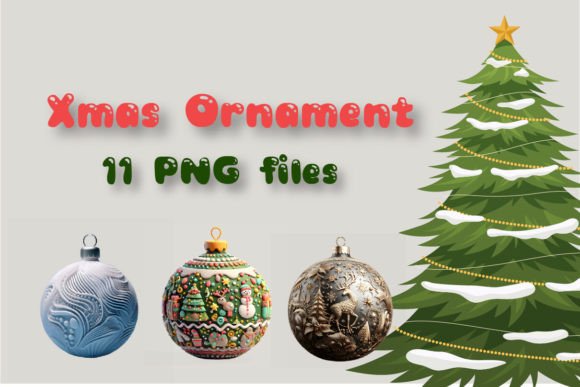
Before diving into the printing process, it is essential to understand the technical specifications of your digital download. A typical package for this type of project includes 4 PNG files, each offering high resolution at 300 DPI. These files are designed to be easily resizable, allowing you to adapt the design to different ornament sizes, such as the standard 2.75-inch ball or larger 4-inch decorative pieces. However, resizing should always be done proportionally to maintain the aspect ratio and prevent distortion of the 3D effect.
It is important to remember that this is not an SVG file. If your workflow relies heavily on vector-based cutting for heat transfer vinyl (HTV), these PNGs will not serve that purpose. They are strictly for direct-to-substrate printing via sublimation. This distinction helps streamline your workflow by ensuring you are using the right tool for the right job. For sublimation, raster images like PNGs are superior because they can capture the nuanced shading and lighting effects that define the "3D" look.
Additionally, users should be aware that colors may vary depending on monitor settings. What appears vibrant and warm on your screen might print slightly cooler or darker due to differences in color calibration between monitors and printers. To mitigate this, many experienced crafters perform test prints on plain paper before committing to expensive sublimation blanks. This step allows for adjustments in brightness, contrast, and saturation within your design software, ensuring the final product matches your vision as closely as possible.
Integrating 3D Designs into Modern Sublimation Workflows
Incorporating a 3D Christmas Tree Ornament Decorate PNG into your workflow is straightforward but requires attention to detail. Start by importing the PNG file into your preferred design software, such as Photoshop, Canva, or Silhouette Studio. Since the background is transparent, you can immediately place the ornament design onto your mockup or directly onto the canvas sized for your specific printer.
- Select Your Substrate: Choose high-quality polyester-coated ornaments. The coating is essential for the sublimation ink to bond properly. White or light-colored coatings yield the most vibrant results.
- Prepare the Design: Resize the 3D PNG to fit the dimensions of your ornament. Ensure the resolution remains at 300 DPI to avoid blurriness. Mirror the image horizontally before printing, as sublimation transfers are reversed during the pressing process.
- Print with Care: Use sublimation-specific ink and paper. Standard inkjet ink will not sublimate and will result in a faded, washed-out appearance. Print a test strip to check color accuracy.
- Press with Precision: Wrap the printed design tightly around the ornament, securing it with heat-resistant tape. Use an oven, mug press, or specialized ornament press according to the manufacturer's recommended time and temperature settings, typically around 380°F for 60-90 seconds.
This streamlined process highlights why digital downloads are so valuable. They remove the barrier of entry for creating complex, professional-looking designs. Instead of spending days learning advanced illustration techniques to create a 3D effect from scratch, crafters can utilize pre-made, high-quality assets to focus on production and marketing.
Practical Benefits for Small Businesses and Hobbyists
For small business owners, the ability to produce high-volume, high-quality goods efficiently is key to profitability. Using a 3D Christmas Tree Ornament Decorate PNG allows for rapid product development. You can create entire collections featuring different color schemes or thematic variations by simply adjusting the background layers or adding text elements to the base PNG. This versatility means you can offer personalized options—such as adding family names or dates—without redesigning the core graphic.
Moreover, the visual appeal of 3D designs tends to perform better on social media platforms like Instagram and Pinterest. The depth and realism catch the eye as users scroll through feeds, increasing engagement and click-through rates. When customers see an ornament that looks like it has dimension and texture, they perceive higher value, which can justify a premium price point compared to flat, generic designs.
Hobbyists also benefit from the ease of use. There is no steep learning curve associated with vector graphics or complex illustration software. The drag-and-drop nature of working with PNGs makes it accessible for beginners while still providing the professional results that experienced crafters demand. The digital download format means instant access; there is no waiting for shipping, allowing you to start creating immediately upon purchase.
Considerations for Best Results
While the technology is user-friendly, achieving the best results requires adherence to best practices. Always ensure your sublimation printer is clean and nozzles are unclogged to prevent banding or streaks in the final print. Use high-quality sublimation paper that holds ink well without bleeding. When pressing, ensure even pressure across the entire surface of the ornament to avoid ghosting or uneven color transfer.
Furthermore, consider the lighting conditions in which your products will be photographed. Since the design mimics a 3D object, proper lighting can enhance the illusion of depth. Avoid harsh, direct flash that might flatten the appearance of the design. Instead, use soft, diffused lighting to highlight the shadows and highlights inherent in the 3D Christmas Tree Ornament Decorate PNG.
In conclusion, leveraging high-resolution, transparent PNG templates for sublimation is a smart strategy for anyone looking to elevate their holiday crafting. By understanding the technical nuances of file types, resolution, and color management, you can consistently produce stunning, professional-grade ornaments that delight customers and stand out in the festive marketplace. The combination of artistic flair and technical precision ensures that your creations are not just decorations, but cherished keepsakes.