Mastering 3D Rainbow Flower Embroidery Car Coaster Designs: A Guide to Sublimation Success
In the vibrant world of custom automotive accessories, personalization has become more than just a trend; it is a form of self-expression. Among the most popular items for car enthusiasts and crafters alike are car coasters. These small but impactful accessories protect cup holders from spills while adding a splash of personality to a vehicle’s interior. Recently, a specific design style has captured the attention of DIY creators: the 3D Rainbow Flower Embroidery aesthetic. However, navigating the digital marketplace for these designs requires a clear understanding of file types, printing techniques, and substrate measurements. This guide aims to demystify the process of using digital templates for sublimation, ensuring you achieve professional-quality results every time.
Understanding the Appeal of 3D Embroidery Aesthetics
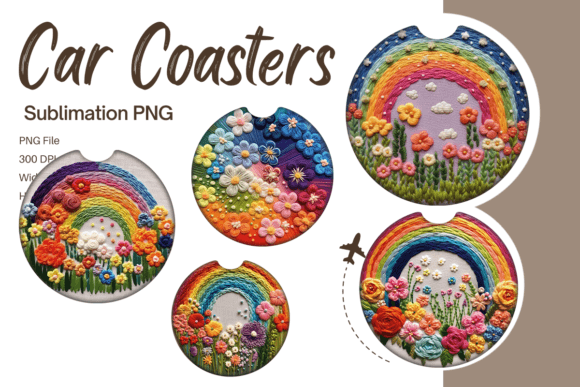
The "3D Rainbow Flower Embroidery" look is a visual trick that combines the tactile warmth of traditional needlework with the vivid color spectrum of modern digital art. Unlike flat vector graphics, these designs mimic the texture and depth of stitched thread. The "rainbow" aspect introduces a gradient of colors that shifts across the petals, creating a dynamic visual effect that changes depending on the lighting within the car. This style resonates with consumers because it bridges the gap between classic craftsmanship and contemporary digital customization.
For creators, this aesthetic offers a unique selling point. It allows for the production of items that look handcrafted and luxurious without the hours of labor required for actual embroidery. By using high-resolution digital files, you can replicate this intricate look on various substrates, primarily focusing on car coasters and car tags. The result is a product that feels premium and personalized, appealing to buyers who want their vehicles to reflect their unique style.
Digital Downloads vs. SVG Files: Clarifying the Difference
One of the most common points of confusion for beginners in the crafting community is the difference between file types. When purchasing a design like the 3D Rainbow Flower template, it is crucial to note that this listing is for a digital download only and, importantly, this is NOT an SVG file.
SVG (Scalable Vector Graphics) files are typically used for cutting machines like Cricut or Silhouette. They consist of paths and shapes that can be resized infinitely without losing quality. However, sublimation printing works differently. It requires raster images—specifically, high-resolution PNG files—that contain pixel data representing color and detail. Because the 3D embroidery effect relies on complex shading, gradients, and texture simulations, a vector format cannot accurately capture the nuance of the design. Therefore, receiving PNG files ensures that the intricate details of the rainbow flowers remain crisp and vibrant when printed.
Understanding this distinction saves time and frustration. If you attempt to use a PNG meant for sublimation in a cutting machine without proper preparation, you may encounter errors. Conversely, trying to print an SVG for sublimation might result in a loss of the detailed texture that makes the design special. Always verify the file type before purchasing to ensure it matches your intended production method.
The Importance of Substrate Measurements and Resizing
Success in sublimation hinges on precision. The digital template provided in this package is designed with a base size of 2.56 x 2.56 inches. While this is a standard dimension for many circular car coasters, it is not universal. Before you begin printing, you must check the exact measurements of your specific substrate.
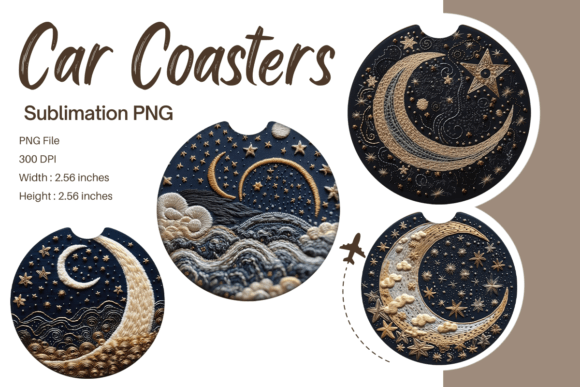
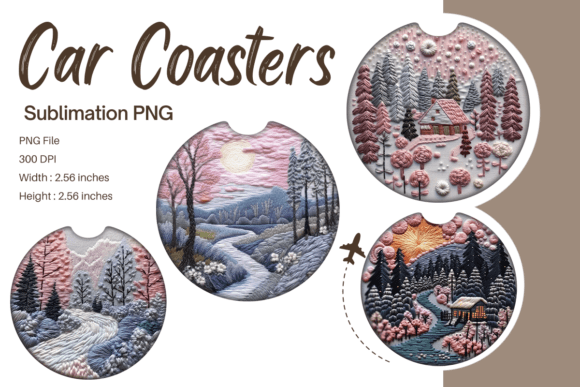
Car coasters come in various diameters, and some feature a small "notch" or cutout to accommodate the clip mechanism of the coaster holder. The package includes ten high-resolution PNG files: five designs for full circles and five designs with a notch. Using the wrong template can lead to misalignment, where part of the flower design is cut off or obscured by the notch.
Fortunately, digital files offer flexibility. You can resize the PNG file to fit the exact size of the substrate you are using. Most graphic design software, such as Adobe Photoshop, Canva, or even free alternatives like GIMP, allows you to adjust the dimensions while maintaining the aspect ratio. However, keep in mind that enlarging a image beyond its original resolution can lead to pixelation. Since these files are provided at 300 DPI (Dots Per Inch), they are optimized for high-quality printing at their intended size. Minor adjustments are safe, but drastic scaling should be avoided to preserve the clarity of the embroidery texture.
Step-by-Step Guide to Sublimating Your Car Coasters
Once you have selected the correct design and verified your measurements, the next step is the printing and pressing process. Sublimation is a heat transfer technique that turns solid ink into gas, allowing it to bond with polyester fibers or polymer-coated surfaces. Here is a logical workflow to ensure the best results:
- Prepare Your File: Open your chosen PNG file in your design software. Mirror or flip the image horizontally. This step is critical because sublimation transfers the image in reverse. If you do not mirror the image, any text or asymmetrical elements in your design will appear backward on the final product.
- Print the Design: Use sublimation ink and sublimation paper. Standard inkjet printers and regular paper will not work, as the ink will not convert properly under heat. Ensure your printer settings are set to "High Quality" or "Photo" mode to capture the 300 DPI detail.
- Prepare the Substrate: Clean your car coaster blank thoroughly to remove any dust or oils. Use heat-resistant tape to secure the sublimation paper to the coaster. This prevents shifting during the press, which can cause ghosting or blurring.
- Heat Press: Set your heat press to the recommended temperature and time for your specific coaster material (typically around 380°F for 40-60 seconds, but always check the manufacturer's guidelines). Apply even pressure. The combination of heat and pressure forces the ink into the substrate.
- Cool and Reveal: After pressing, carefully remove the paper while wearing heat-resistant gloves. Allow the coaster to cool completely before handling to ensure the ink has fully set.
Practical Relevance in Modern Crafting and Business
For small business owners and Etsy sellers, offering customized car accessories is a lucrative niche. The 3D Rainbow Flower Embroidery design stands out in a crowded market because it offers a high perceived value. Customers often associate embroidered textures with luxury and durability. By mastering the technical aspects of sublimation, creators can produce items that look expensive but have low production costs.
Moreover, this type of project fits seamlessly into the modern "maker" economy. It encourages creativity and technical skill development. Understanding the nuances of digital files, resizing, and heat transfer protocols empowers crafters to expand their product lines beyond simple coasters. The same principles can be applied to keychains, luggage tags, and other polymer-coated items. This versatility makes the initial investment in learning these skills highly rewarding.
Common Misunderstandings and Troubleshooting
Even with high-quality files, issues can arise. A common misunderstanding is that sublimation works on any surface. In reality, it only bonds with polyester or polymer coatings. Attempting to sublimate onto a ceramic mug without a coating, or a cotton t-shirt, will result in a washed-out, temporary image. Always ensure your blanks are sublimation-ready.
Another frequent issue is color discrepancy. Colors on your computer screen may look different than they do when printed. This is due to the difference between RGB (screen) and CMYK (print) color spaces. While sublimation uses a different process, the principle remains: calibrate your monitor if possible, and perform test prints to adjust color saturation and brightness. The vibrant rainbow hues in this design may require slight tweaks to ensure they pop without looking neon or unnatural.
Conclusion
The 3D Rainbow Flower Embroidery Car Coaster template represents a perfect blend of artistic flair and technical precision. By understanding that this is a digital download consisting of high-resolution PNG files—not SVGs—you set yourself up for success. Paying attention to substrate measurements, utilizing the correct notch variations, and following proper sublimation protocols ensures that your final product is both beautiful and durable. Whether you are crafting for personal enjoyment or building a small business, mastering these details allows you to create standout accessories that bring joy and style to everyday drives. Embrace the learning curve, experiment with your settings, and enjoy the creative process of bringing digital designs to life.