Unleashing Creativity with 3D Halloween Jewelry: A Maker’s Guide to Digital Design Files
The intersection of seasonal celebration and digital fabrication has opened up a vibrant new avenue for creators, hobbyists, and small business owners alike. As the autumn leaves begin to fall and the air turns crisp, attention shifts toward one of the most visually rich holidays of the year: Halloween. While costumes and decorations are staples, there is a growing demand for unique, personalized accessories that stand out from mass-produced store-bought items. This is where 3D Halloween Jewelry comes into play, offering a blend of artistic expression and technical precision that appeals to a wide audience.
For those familiar with computer-aided design (CAD) or those just beginning their journey into digital crafting, the availability of high-quality design files is crucial. Specifically, collections featuring intricate motifs like the Spider Web Finger provide an excellent entry point. These designs are typically distributed in a comprehensive zip folder containing multiple file formats, including SVG, DXF, EPS, PDF, JPG, and PNG. Understanding how to utilize these formats effectively can transform a simple digital download into a tangible, wearable piece of art.
The Versatility of Multi-Format Design Files
One of the most significant advantages of purchasing or downloading professional-grade 3D Halloween Jewelry designs is the inclusivity of file types. Different machines and software require specific data inputs, and a well-curated zip folder ensures that regardless of your toolset, you can proceed with your project without friction.
- SVG (Scalable Vector Graphics): Ideal for users operating vinyl cutters, laser engravers, or certain 3D printing slicers that accept vector paths. SVGs maintain quality at any size, making them perfect for resizing jewelry components without pixelation.
- DXF (Drawing Exchange Format): A standard in the CAD world, DXF files are essential for users working with CNC machines or more advanced laser cutting software. They provide precise geometric data that ensures accurate cuts and engravings.
- EPS (Encapsulated PostScript): Often used by graphic designers, EPS files are compatible with illustration software like Adobe Illustrator. This allows creators to modify the design elements, such as adjusting the thickness of spider web strands, before sending them to production.
- PDF (Portable Document Format): While not always directly usable for machine operation, PDFs serve as excellent reference guides. They often contain assembly instructions, scale references, or visual previews of the final product.
- JPG and PNG: These raster image formats are invaluable for sublimation printing, decal creation, or simply for marketing purposes. A high-resolution PNG with a transparent background allows sellers to create compelling product listings for their handmade 3D Halloween Jewelry.
By providing this array of options, designers empower users to adapt the Spider Web Finger concept to various manufacturing methods. Whether you are using a resin 3D printer to create delicate, lace-like structures or a laser cutter to etch patterns onto leather or acrylic, the right file format ensures fidelity to the original artistic vision.
Exploring the Spider Web Finger Design
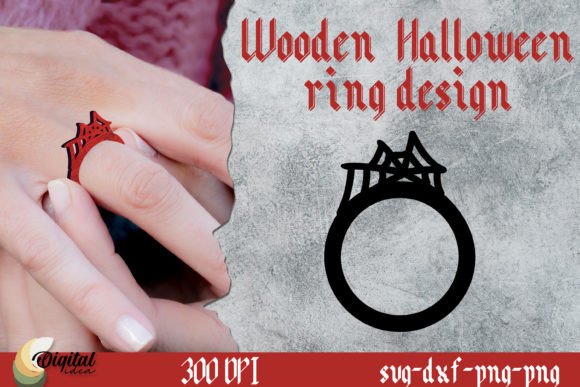
The Spider Web Finger motif is particularly striking in the context of Halloween accessories. It evokes imagery of gothic elegance, mystery, and the natural intricacy of arachnid architecture. When translated into 3D Halloween Jewelry, this design can take on many forms, from bold statement rings to subtle pendant accents.
The structural complexity of a spider web presents both a challenge and an opportunity for digital fabrication. In 3D printing, for instance, the overhangs and thin strands require careful consideration of support structures and layer height. However, when executed correctly, the result is a lightweight, airy piece that captures light and shadow in fascinating ways. For laser cutting, the design must be optimized to ensure that the "web" remains connected and durable, avoiding fragile points that might break during wear.
Practical Applications and Real-World Scenarios
Who benefits from these versatile design files? The answer spans a broad spectrum of users:
- Etsy Sellers and Small Business Owners: For entrepreneurs, time is money. Starting from scratch with a complex 3D model can take hours or even days. By utilizing pre-made 3D Halloween Jewelry files, sellers can rapidly prototype and produce inventory. The ability to offer customization—such as changing material colors or sizes—adds value to their storefronts.
- Cosplayers and Costume Enthusiasts: Authenticity is key in cosplay. A generic plastic ring rarely suffices for a character-driven look. A custom-printed Spider Web Finger ring, painted to match a specific costume palette, adds a level of detail that elevates the entire ensemble.
- Educators and Workshop Leaders: Teaching digital fabrication requires engaging projects. Halloween-themed jewelry offers a fun, low-stakes way for students to learn about vector editing, slicing software, and material properties. The immediate gratification of wearing the final product reinforces learning outcomes.
- Hobbyists and DIYers: For individuals who craft for personal enjoyment, these files provide a sandbox for experimentation. Users can test different filaments, resins, or metals, exploring the limits of their equipment without the pressure of commercial deadlines.
Evaluating Suitability for Your Project
Before diving into production, it is essential to assess whether a specific 3D Halloween Jewelry design aligns with your capabilities and goals. Consider the following factors:
Machine Compatibility: Not all 3D printers handle fine details equally. Fused Deposition Modeling (FDM) printers may struggle with the tiny gaps in a spider web unless equipped with a very small nozzle. Stereolithography (SLA) or resin printers are generally better suited for such intricate jewelry due to their higher resolution. Similarly, laser cutters have kerf widths and minimum feature sizes that must be respected to prevent burn-through or structural weakness.
Material Selection: The choice of material dramatically affects the final aesthetic and durability. Resin offers smooth finishes and can be translucent, mimicking glass or crystal. PLA and PETG are affordable and come in various colors but may show layer lines. Metal-filled filaments can be sanded and polished to achieve a metallic look, though they require post-processing. For laser-cut pieces, acrylic provides a glossy, modern look, while wood veneer offers a rustic, organic feel.
Post-Processing Requirements: Raw prints or cuts rarely represent the final product. 3D Halloween Jewelry often requires sanding, curing, painting, or assembly. The Spider Web Finger design, with its many nooks and crannies, may require meticulous cleaning to remove support material or soot. Factor this time into your project planning.
Strengths and Considerations of Digital Jewelry Making
The shift toward digital design files for accessories like 3D Halloween Jewelry brings several strengths. It democratizes design, allowing anyone with access to a printer or cutter to produce high-quality items. It also reduces waste, as digital files can be iterated upon virtually before committing physical materials. Furthermore, the scalability of digital files means that a design can be adjusted for a child’s finger or an adult’s wrist with minimal effort.
However, there are considerations to keep in mind. Intellectual property rights are paramount; always respect the licensing terms associated with downloaded files. Some creators allow personal use only, while others permit commercial sales. Additionally, the learning curve for optimizing files for specific machines can be steep. Beginners may face trial and error with settings like infill density, print speed, or laser power.
Limitations also exist regarding material properties. While 3D printed resin can look like glass, it may not possess the same thermal resistance or long-term UV stability. Plastic jewelry may not appeal to consumers seeking precious metals or gemstones. Therefore, positioning 3D Halloween Jewelry as unique, artistic, or novelty items rather than heirloom pieces manages customer expectations effectively.
Conclusion: Embracing the Creative Possibilities
The world of 3D Halloween Jewelry is rich with potential. From the eerie elegance of a Spider Web Finger ring to bold, thematic pendants, digital design files empower creators to bring their visions to life with precision and ease. By leveraging multi-format zip folders containing SVG, DXF, EPS, PDF, JPG, and PNG files, users can adapt designs to their preferred tools and workflows.
Whether you are a seasoned professional looking to expand your product line, a teacher seeking engaging curriculum materials, or a hobbyist eager to celebrate the season with a personal touch, these resources offer a solid foundation. The key lies in understanding the interplay between design, material, and machine. With careful evaluation and a willingness to experiment, you can create stunning, wearable art that captures the spirit of Halloween. As technology continues to evolve, the boundary between digital imagination and physical reality blurs, inviting us all to participate in the creative process. Explore, create, and wear your imagination.